Every year, headlines scream that America is drowning in porn. From late-night comedians to conservative pundits, the narrative is the same: the U.S. is a nation obsessed, addicted, and morally unraveled by online pornography. But what if the real story isn’t about excess - but about change? The truth is more complicated than the headlines let on. While porn is more accessible than ever, usage patterns, attitudes, and even the reasons people watch have shifted dramatically over the last decade. And no, it’s not because Americans are uniquely depraved - it’s because technology rewired how we connect, explore, and cope.
Some people turn to sites like paris eacorts for companionship or fantasy, but that’s not the same as bingeing videos on a laptop at 2 a.m. The line between fantasy and reality, between curiosity and compulsion, is blurry - and it’s different for everyone. What’s clear is that the idea of America being "porn-crazed" is less about numbers and more about discomfort with sexual openness.
How Much Porn Are Americans Actually Watching?
In 2023, Pornhub reported over 33 billion visits globally. Roughly 25% of those came from the U.S. That sounds massive - until you compare it to Netflix, which had over 26 billion hours streamed in the same year. If porn were truly an obsession, wouldn’t it dominate screen time like streaming TV? Instead, porn use has plateaued. A 2024 study from the University of California found that average daily porn consumption among American adults dropped from 17 minutes in 2016 to just 9 minutes in 2023. That’s not a surge - that’s a decline.
Why? Because people are getting smarter about their habits. More are using blockers. More are choosing real relationships over digital substitutes. And younger generations - the ones everyone assumes are glued to screens - are actually less likely to watch porn daily than millennials were at the same age.
Who’s Watching? And Why?
It’s not just teenage boys. The fastest-growing demographic for porn viewership isn’t men under 25 - it’s women over 40. A 2025 survey by the Kinsey Institute showed that 62% of women aged 40-55 had watched porn in the past month, up from 38% in 2015. Many cited curiosity, relationship exploration, or simply stress relief. For some, it’s a way to reconnect with their own sexuality after years of neglect or societal pressure.
Men still make up the majority of viewers, but their reasons are changing too. In 2010, the top search terms were "hot girls," "teen," "public." Today, they’re "couples," "slow sex," "emotional intimacy." The fantasy isn’t just about raw visuals anymore - it’s about connection. Even the content itself is evolving. Independent creators are pushing back against mainstream tropes, offering more realistic, consensual, and diverse portrayals of sex.
The Myth of Addiction
"Porn addiction" isn’t a recognized diagnosis in the DSM-5, the manual psychiatrists use to classify mental disorders. The American Psychiatric Association says there’s no solid evidence that porn use causes compulsive behavior the way drugs or gambling do. That doesn’t mean people don’t struggle - some do. But labeling it as an addiction often distracts from the real issues: loneliness, anxiety, shame, or poor sexual education.
Take the case of Mark, a 32-year-old teacher from Ohio. He thought he was addicted after watching porn daily for five years. He felt guilty. He hid it. He blamed it for his breakup. But therapy revealed he wasn’t addicted to porn - he was addicted to avoiding his emotions. Once he learned to sit with his feelings, the porn use dropped naturally. His story isn’t rare.
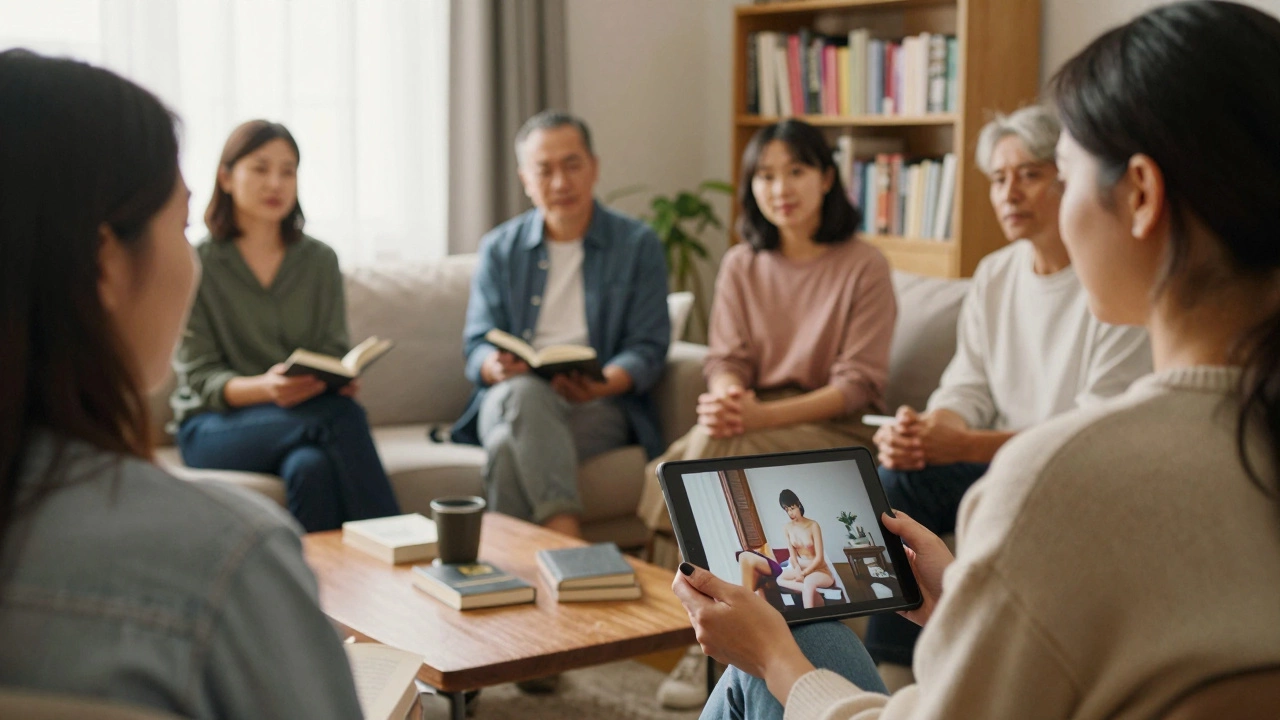
Technology Didn’t Create the Problem - It Exposed It
Porn didn’t cause America’s sexual confusion. It just made it visible. Before the internet, people had secret magazines, VHS tapes, and late-night cable channels. The difference now is that it’s all in one place, on a device you carry in your pocket. That’s not a moral crisis - it’s a technological shift.
The real issue isn’t access. It’s the lack of honest conversations about sex. Schools still teach abstinence. Parents avoid the topic. Doctors rarely ask patients about their sexual habits. So people turn to porn not because they’re depraved - but because they’re curious, confused, and alone.
What About the Harm?
There are real harms - but they’re not what you think. The biggest damage isn’t from watching porn. It’s from being shamed for watching it. That shame leads to secrecy, which leads to isolation, which leads to deeper mental health struggles. Studies show that people who feel guilty about their porn use report higher levels of depression and anxiety - not because of the porn, but because of the stigma.
Also, there’s exploitation in the industry. Not all content is ethical. Some sites profit from non-consensual material or underage performers. That’s a problem. But it’s not solved by banning porn. It’s solved by supporting ethical platforms, demanding transparency, and holding bad actors accountable.
And then there’s the fake narrative: that porn ruins relationships. Research from the Journal of Sex Research found no link between porn use and relationship dissatisfaction - unless one partner feels betrayed or lied to. The problem isn’t the porn. It’s the lack of communication.
The Paris.escort Aside
Some people search for things like paris.escort because they’re looking for physical connection, not just visual stimulation. That’s a different need - one rooted in loneliness, travel, or desire for intimacy without emotional entanglement. It’s not the same as watching a video. But both point to the same underlying truth: humans crave connection. Sometimes, they just don’t know how to ask for it the right way.
So Is America Porn-Crazed?
No. America is sex-curious. America is lonely. America is confused about intimacy in a digital age. And yes, people watch porn - but they’re also quitting it, talking about it, and redefining it. The decline in daily use, the rise in female viewership, the shift toward emotional content - these aren’t signs of a nation out of control. They’re signs of a culture slowly catching up to its own humanity.
The question isn’t whether America watches too much porn. It’s whether we’re willing to stop judging it - and start understanding why people turn to it in the first place.